What Is a Domain Transfer Code (EPP/Auth Code) and How Do You Get It?
10.10.2026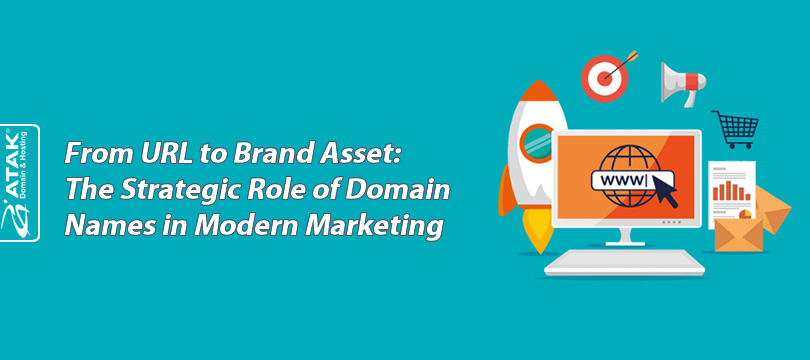
A domain name used to be a technical necessity. Today, it’s a strategic decision that sits at the center of branding, marketing, and growth. The shift is subtle but powerful. Businesses are no longer asking “What’s available?” They’re asking “What tells our story best?”
That change has turned domains into assets, not just addresses.

Before a user sees your product, your ad, or your Instagram page, they often see your domain. It shows up in search results, ads, emails, and even word of mouth. That makes it your first impression.
A strong domain instantly signals clarity and trust. A weak one creates friction.
Think about the difference between:
The first feels like a brand without having to explain it further.
This matters because users make snap judgments. Research shows that clear and simple domains build credibility, while confusing ones reduce trust even before a user engages further. (The Law Institute)
In other words, your domain is not just where people land. It’s how they decide if you’re worth clicking.

Nike didn’t stop at owning nike.com. They also secured JustDoIt.com, turning a campaign slogan into a digital property.
That move did two things:
Instead of letting the slogan exist only in ads, they turned it into a destination. A domain became an extension of storytelling.
This is where domains evolve into brand assets that anchor campaigns.
Before it became a household name, Ring was called Doorbot. Functional, but forgettable.
The shift to “Ring” and the acquisition of Ring.com changed everything. The name was simple, memorable, and emotionally resonant.
According to founder Jamie Siminoff, the domain contributed tens of millions in value during the company’s growth. (Dynadot)
That's a measurable ROI.
The lesson is clear. A strong domain reduces the cost of marketing. It’s easier to remember, easier to share, and easier to trust.

Most marketers think about domains in terms of branding. But they also play a direct role in performance.
A clear, relevant domain can improve click-through rates because users understand what they’re getting before they click. Studies suggest that domains aligned with brand clarity can see higher engagement compared to generic or confusing names. (Techiegigs)
Consider two ads:
The first explanation. The second invites.
Which one works better depends on the strategy. One captures intent. The other builds brand equity.
Smart companies use both. They secure descriptive domains for acquisition and brandable ones for long-term positioning.

The best domains behave like prime real estate.
They are:
The sale of Voice.com for $30 million is one of many examples showing how domains can carry significant standalone value. (Medium)
But beyond resale value, ownership matters for control.
Owning your exact brand name as a domain means:
Compare that to brands that rely heavily on marketplaces or social media.
A domain is one of the few digital assets you fully control.

Search engines have evolved, but domains still play a role in discoverability.
A domain that reflects your category or intent helps users and search engines understand your relevance. (AEserver Domains and Hosting UAE)
For example:
Neither is inherently better. The strategy depends on whether you’re capturing demand or creating it.
Many brands now use a hybrid approach:
This layered strategy reduces dependence on paid ads while improving organic visibility.

The dominance of established extensions is real, but it’s no longer the only option.
New domain extensions allow brands to be more expressive and precise. A fashion brand might use something like:
A community platform might choose:
These extensions act like built-in positioning. They tell users what the brand is about before they even click.
More importantly, they open up naming possibilities. With .com saturation, many great names are already taken. New extensions bring back creativity and availability.
Modern marketing is fragmented. Social, paid ads, email, influencers, content.
The domain sits at the center of all of it.
Every campaign points somewhere. That “somewhere” is your domain.
Think of it as:
Without a strong domain, campaigns lose efficiency. You spend more to explain, clarify, and convince.
With the right domain, half the job is already done.

Despite its importance, many brands still treat domains as an afterthought.
Here are the most common mistakes:
The biggest mindset change is this.
A domain is not a cost. It’s an investment.
It impacts:
And unlike most marketing spend, it doesn’t disappear after a campaign ends.
It compounds.
In a crowded digital landscape, attention is expensive and trust is fragile.
A strong domain does both jobs quietly. It earns the click and sets the tone before a single word of copy is read.
That’s why the smartest brands don’t just pick a domain.
They build around it.