
How to A/B Test with Google Optimize in WordPress for Free
02.03.2022
Quick Answer: A country domain extension (ccTLD) is a two-letter suffix reserved for a specific country or territory, such as .tr for Turkey, .de for Germany, or .uk for the United Kingdom. Businesses use ccTLDs to signal local relevance, improve regional SEO, and build trust with a country-specific audience, while global brands typically rely on .com instead.

If you only read one table in this guide, make it this one.
| Your Goal | Recommended Extension |
| Targeting the Turkish market | .tr or .com.tr |
| Targeting Germany | .de |
| Targeting the United Kingdom | .uk or .co.uk |
| Building a global, borderless brand | .com |
| Targeting the European Union broadly | .eu |
| Launching an AI or tech startup | .ai, .io, or .com |
| A short, brandable name when .com is taken | .co or a domain hack (e.g. .io, .ly) |
| A SaaS or developer-focused product | .dev, .app, or .com |
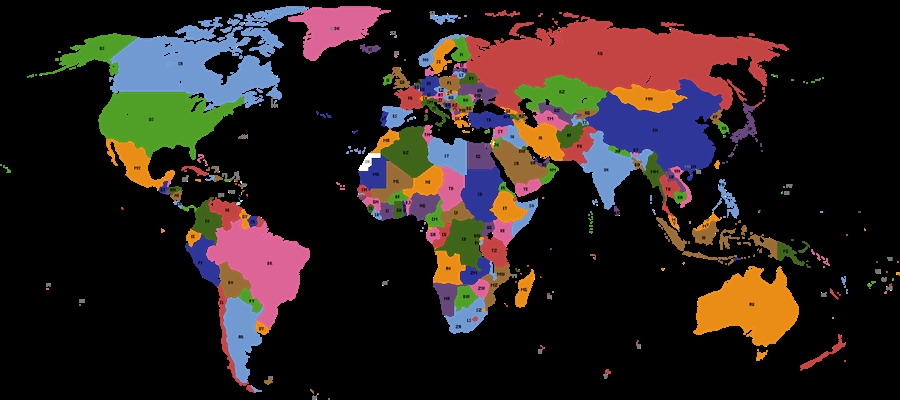
ccTLD stands for country code top-level domain: a two-letter domain extension assigned to a specific country or territory based on the ISO 3166-1 alpha-2 standard, the same two-letter country code system used in passports, currencies, and international shipping labels. Every ccTLD is managed by a registry operator, the organization ICANN designates to run that specific extension, set its registration rules, and maintain its records in the global DNS.
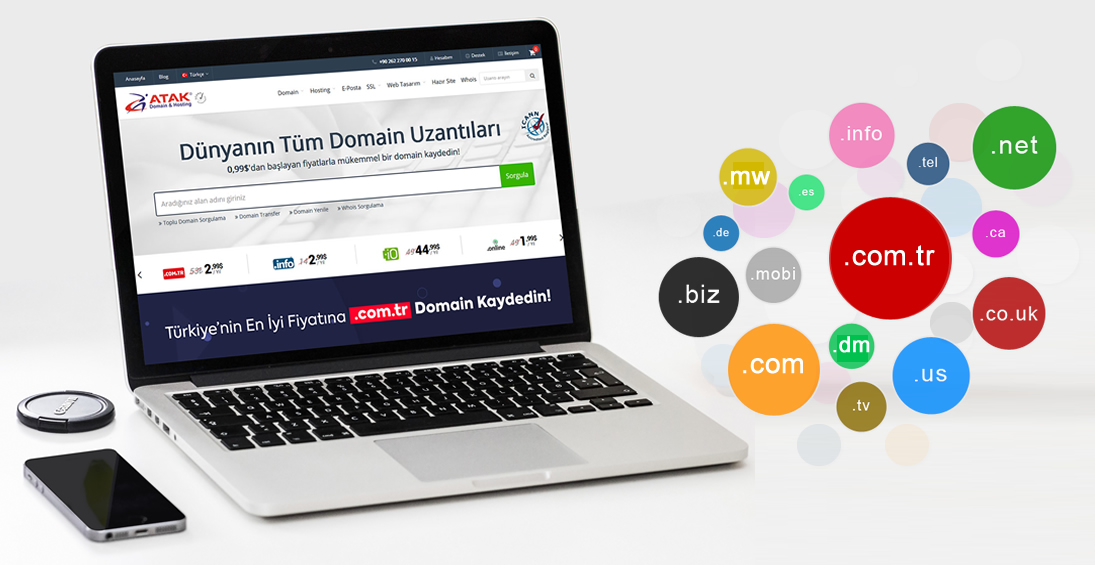
This is different from a gTLD (generic top-level domain), such as .com, .org, or .net, which is not tied to any single country and is open for registration worldwide. ccTLDs were originally intended strictly for their assigned country, but some, like .io and .ai, have taken on a second life as branding tools far beyond their original territory, a practice known as a domain hack.
| Aspect | ccTLD | gTLD |
| Meaning | Country code top-level domain | Generic top-level domain |
| Examples | .tr, .de, .uk, .jp | .com, .org, .net |
| Managed by | A national registry operator | ICANN-approved global registries |
| Registration rules | Often requires local presence or a trustee | Open to anyone, anywhere |
| Best for | Local and regional targeting | Global, borderless branding |
The right extension depends on where your customers are, not where your company is registered. A business serving a single country's market benefits most from that country's ccTLD, since it signals local relevance immediately, both to visitors and to search engines. A business selling across borders, with no single dominant market, is usually better served by .com, which carries no geographic signal at all.
A useful middle path many international companies use is running .com as the primary global domain while registering local ccTLDs, such as .de, .fr, or .co.uk, for country-specific storefronts or campaigns, each with its own hreflang tags pointing search engines to the right version for the right audience.
For local search visibility, yes, generally. Google's geo-targeting systems treat a country-specific ccTLD as a strong, automatic signal that a site is relevant to that country, independent of anything else on the page. A .tr domain doesn't need extra configuration to be treated as Turkey-relevant, while a .com domain serving the same Turkish audience typically needs to set an explicit target country in Google Search Console and rely on hreflang tags to achieve a similar effect.
For global SEO, the opposite is true. A single ccTLD ties a domain's authority to one country's search results; it will not automatically rank well in other countries the way a .com or a properly configured multi-region .com setup can. Neither extension is universally "better" for SEO; each is better suited to a different scope of audience.
Global brands overwhelmingly default to .com, and for good reason: it carries no country association, is recognized everywhere, and avoids the perception of being a "local-only" business. A ccTLD can work for a global brand only when the extension itself has become a recognized branding convention rather than a literal country signal, as with .io in tech or .ai in artificial intelligence.
The trade-off is availability and cost. Desirable .com names are frequently taken or expensive on the resale market, which is one reason ccTLD domain hacks became popular among startups in the first place.
An online store selling exclusively to customers in Germany registers a .de domain instead of .com. The extension signals local trust immediately, and Google's geo-targeting treats the site as Germany-relevant by default, without any additional Search Console configuration.
A SaaS company selling in over 40 countries keeps .com as its primary domain and uses subdirectories with hreflang tags for each language, rather than registering a separate ccTLD for every market, which would fragment both SEO authority and brand consistency.
A London-based startup registers both .co.uk and .com on day one. It uses .co.uk for local marketing campaigns and .com as the primary domain once international customers start signing up.
A machine learning startup can't secure a reasonably priced .com name, so it registers a .ai domain instead. The extension has become an accepted convention in the AI industry, so the country association with Anguilla goes largely unnoticed by customers.
A marketing agency operating only within France registers a .fr domain to reinforce its local identity and qualify for local search relevance, requirements that .fr enforces through its EU-residency-based registration rules.
The extensions below are the ones businesses ask about most often, along with who manages them and what you need to register. The complete reference table for every country extension follows further down this guide.
| Extension | Country | Registry Operator | Registration Notes |
| .de | Germany | DENIC | Requires an administrative contact based in Germany |
| .uk | United Kingdom | Nominet | Open to anyone, no residency required |
| .us | United States | Registry Services, LLC (Neustar Registry) | Requires a US nexus: citizen, resident, or US-connected entity |
| .nl | Netherlands | SIDN | Open to anyone, no restrictions |
| .ch | Switzerland | SWITCH | Open to anyone, no restrictions |
| .ae | United Arab Emirates | TDRA | Open to anyone, no restrictions |
| .ge | Georgia | Caucasus Online | Local representative often required for foreign registrants |
| .eu | European Union | EURid | Requires an EU-based registrant or representative |
| .tr | Turkey / TRNC | BTK / Nic.tr | Local presence generally required for most sub-extensions |
A newer generation of extensions has grown far beyond its original country or category association, driven largely by branding needs in technology and AI.
Most of these are gTLDs rather than true ccTLDs, with the notable exceptions of .ai and .io, both of which are technically country codes that have been almost entirely reclaimed by the tech industry.
Several popular ccTLDs restrict registration to residents, local companies, or representatives based in that country. If you don't meet the requirement directly, most registrars, including Atak Domain, offer a trustee service: a local representative registers the domain on your behalf so you can still use the extension without relocating or incorporating locally.
| Extension | Requirement | Typical Workaround |
| .de | Administrative contact with a German address | Registrar-provided local admin contact |
| .fr | EU/EEA residency or registered entity | Local representative or trustee service |
| .ca | Canadian Presence Requirement | Trustee service through an accredited registrar |
| .cn | Business license verification in some cases | Local agent or trustee arrangement |
| .eu | EU-based registrant or representative | Local representative or trustee service |
| .us | US Nexus requirement | US-based trustee or nexus agent |
At the opposite end, several ccTLDs impose no residency or local-presence requirements at all, which is part of why they became popular for branding purposes worldwide.
If your business is based in Germany but you run a Turkey-focused marketing agency, registering a .tr domain alongside your .com can improve your ranking chances for visitors located in Turkey, since search engines weigh the searcher's location and the domain's country association together.
Some ccTLDs require proof of local address, citizenship, or a local ID number to register. For customers, this bar makes a ccTLD-based business look more established and legitimate within that country.
Certain ccTLDs double as ordinary words or abbreviations once combined with a domain name, a practice known as a domain hack. Colombia's .co, for instance, is what powers Twitter's t.co link shortener.
Working daily with resellers, agencies, and business owners registering ccTLDs, a few mistakes come up repeatedly.
For reference, here is the full list of country code extensions currently or formerly assigned in the domain name system, along with DNSSEC and IDN (internationalized domain name) support for each. Discontinued or legacy codes are noted directly in the country column.
| ccTLD | Country / Territory | DNSSEC | IDN |
| .ac | Ascension Island | Yes | Yes |
| .ad | Andorra | Yes | No |
| .ae | United Arab Emirates | No | No |
| .af | Afghanistan | Yes | No |
| .ag | Antigua and Barbuda | Yes | No |
| .ai | Anguilla | No | No |
| .al | Albania | No | No |
| .am | Armenia | Yes | No |
| .ao | Angola | No | No |
| .aq | Antarctica | No | No |
| .ar | Argentina | Yes | Yes |
| .as | American Samoa | Yes | No |
| .at | Austria | Yes | No |
| .aw | Aruba | Yes | No |
| .ax | Åland Islands | No | No |
| .az | Azerbaijan | No | No |
| .ba | Bosnia and Herzegovina | No | No |
| .bb | Barbados | No | No |
| .bd | Bangladesh | No | Yes |
| .be | Belgium | Yes | Yes |
| .bf | Burkina Faso | No | No |
| .bg | Bulgaria | Yes | Yes |
| .bh | Bahrain | No | No |
| .bi | Burundi | No | No |
| .bj | Benin | No | No |
| .bl | Saint Barthélemy | No | No |
| .bm | Bermuda | No | No |
| .bn | Brunei | No | No |
| .bo | Bolivia | No | No |
| .br | Brazil | Yes | Yes |
| .bq | Caribbean Netherlands | No | No |
| .bs | Bahamas | No | No |
| .bt | Bhutan | No | No |
| .bv | Bouvet Island | No | No |
| .bw | Botswana | Yes | No |
| .by | Belarus | Yes | No |
| .bz | Belize | Yes | No |
| .ca | Canada | Yes | Yes |
| .cc | Cocos (Keeling) Islands | Yes | No |
| .cd | Democratic Republic of the Congo | No | No |
| .cf | Central African Republic | No | No |
| .cg | Republic of the Congo | Yes | No |
| .ci | Côte d'Ivoire | No | No |
| .ch | Switzerland | Yes | Yes |
| .ck | Cook Islands | Yes | No |
| .cl | Chile | Yes | Yes |
| .cm | Cameroon | Yes | No |
| .cn | China | Yes | Yes |
| .co | Colombia | Yes | No |
| .cr | Costa Rica | Yes | No |
| .cs | Czechoslovakia (discontinued) | No | No |
| .cu | Cuba | No | No |
| .cv | Cabo Verde | No | No |
| .cw | Curaçao | No | No |
| .cx | Christmas Island | No | No |
| .cy | Cyprus | Yes | No |
| .cz | Czechia | Yes | No |
| .dd | East Germany (discontinued) | No | No |
| .de | Germany | Yes | Yes |
| .dj | Djibouti | Yes | No |
| .dk | Denmark | Yes | Yes |
| .dm | Dominica | No | No |
| .do | Dominican Republic | No | No |
| .dz | Algeria | No | No |
| .ec | Ecuador | Yes | No |
| .ee | Estonia | No | Yes |
| .eg | Egypt | No | No |
| .eh | Western Sahara | No | No |
| .er | Eritrea | Yes | No |
| .es | Spain | No | No |
| .et | Ethiopia | Yes | No |
| .eu | European Union | Yes | Yes |
| .fi | Finland | Yes | Yes |
| .fj | Fiji | No | No |
| .fk | Falkland Islands | No | No |
| .fm | Micronesia | Yes | No |
| .fo | Faroe Islands | Yes | No |
| .fr | France | Yes | Yes |
| .ga | Gabon | No | No |
| .gb | United Kingdom (rarely used; .uk is standard) | Yes | No |
| .gd | Grenada | No | No |
| .ge | Georgia | No | No |
| .gf | French Guiana | No | No |
| .gg | Guernsey | No | No |
| .gh | Ghana | Yes | No |
| .gi | Gibraltar | Yes | No |
| .gl | Greenland | No | No |
| .gm | Gambia | Yes | No |
| .gn | Guinea | No | No |
| .gp | Guadeloupe | No | No |
| .gq | Equatorial Guinea | Yes | No |
| .gr | Greece | Yes | Yes |
| .gs | South Georgia and the South Sandwich Islands | No | No |
| .gt | Guatemala | No | Yes |
| .gu | Guam | No | No |
| .gw | Guinea-Bissau | No | No |
| .gy | Guyana | No | No |
| .hk | Hong Kong | No | Yes |
| .hm | Heard Island and McDonald Islands | Yes | No |
| .hn | Honduras | Yes | No |
| .hr | Croatia | No | No |
| .ht | Haiti | Yes | Yes |
| .hu | Hungary | Yes | No |
| .id | Indonesia | Yes | Yes |
| .ie | Ireland | No | No |
| .il | Israel | No | Yes |
| .im | Isle of Man | Yes | No |
| .in | India | Yes | No |
| .io | British Indian Ocean Territory | Yes | No |
| .iq | Iraq | No | No |
| .ir | Iran | No | Yes |
| .is | Iceland | No | Yes |
| .it | Italy | No | Yes |
| .je | Jersey | No | No |
| .jm | Jamaica | No | No |
| .jo | Jordan | Yes | No |
| .jp | Japan | Yes | No |
| .ke | Kenya | Yes | No |
| .kg | Kyrgyzstan | Yes | No |
| .kh | Cambodia | Yes | No |
| .ki | Kiribati | No | No |
| .km | Comoros | No | No |
| .kn | Saint Kitts and Nevis | No | No |
| .kp | North Korea | Yes | No |
| .kr | South Korea | Yes | Yes |
| .kw | Kuwait | Yes | No |
| .ky | Cayman Islands | No | No |
| .kz | Kazakhstan | Yes | No |
| .la | Laos | Yes | No |
| .lb | Lebanon | Yes | No |
| .lc | Saint Lucia | Yes | No |
| .li | Liechtenstein | Yes | Yes |
| .lk | Sri Lanka | Yes | Yes |
| .lr | Liberia | No | No |
| .ls | Lesotho | Yes | No |
| .lt | Lithuania | Yes | Yes |
| .lu | Luxembourg | Yes | Yes |
| .lv | Latvia | Yes | Yes |
| .ly | Libya | Yes | No |
| .ma | Morocco | No | No |
| .mc | Monaco | No | No |
| .md | Moldova | Yes | No |
| .me | Montenegro | Yes | No |
| .mf | Saint Martin | No | No |
| .mg | Madagascar | No | No |
| .mh | Marshall Islands | No | No |
| .mk | North Macedonia | Yes | No |
| .ml | Mali | Yes | No |
| .mm | Myanmar | Yes | No |
| .mn | Mongolia | Yes | No |
| .mo | Macao | No | No |
| .mp | Northern Mariana Islands | No | No |
| .mq | Martinique | No | No |
| .mr | Mauritania | No | No |
| .ms | Montserrat | No | No |
| .mt | Malta | No | No |
| .mu | Mauritius | No | No |
| .mv | Maldives | Yes | No |
| .mw | Malawi | Yes | No |
| .mx | Mexico | No | No |
| .my | Malaysia | Yes | No |
| .mz | Mozambique | Yes | No |
| .na | Namibia | Yes | No |
| .nc | New Caledonia | Yes | No |
| .ne | Niger | No | No |
| .nf | Norfolk Island | No | No |
| .ng | Nigeria | Yes | No |
| .ni | Nicaragua | Yes | No |
| .nl | Netherlands | Yes | No |
| .no | Norway | No | Yes |
| .np | Nepal | Yes | No |
| .nr | Nauru | Yes | No |
| .nu | Niue | Yes | Yes |
| .nz | New Zealand | Yes | Yes |
| .om | Oman | Yes | No |
| .pa | Panama | No | No |
| .pe | Peru | No | Yes |
| .pf | French Polynesia | No | No |
| .pg | Papua New Guinea | No | No |
| .ph | Philippines | Yes | No |
| .pk | Pakistan | Yes | No |
| .pl | Poland | Yes | Yes |
| .pm | Saint Pierre and Miquelon | Yes | Yes |
| .pn | Pitcairn Islands | No | No |
| .pr | Puerto Rico | Yes | No |
| .ps | Palestine | Yes | No |
| .pt | Portugal | Yes | Yes |
| .pw | Palau | No | No |
| .py | Paraguay | Yes | No |
| .qa | Qatar | Yes | No |
| .re | Réunion | Yes | Yes |
| .ro | Romania | Yes | Yes |
| .rs | Serbia | No | No |
| .ru | Russia | No | No |
| .rw | Rwanda | Yes | No |
| .sa | Saudi Arabia | Yes | Yes |
| .sb | Solomon Islands | No | No |
| .sc | Seychelles | Yes | No |
| .sd | Sudan | No | No |
| .se | Sweden | Yes | Yes |
| .sg | Singapore | Yes | No |
| .sh | Saint Helena | Yes | Yes |
| .si | Slovenia | Yes | Yes |
| .sj | Svalbard and Jan Mayen (not yet registrable) | No | No |
| .sk | Slovakia | No | No |
| .sl | Sierra Leone | No | No |
| .sm | San Marino | No | No |
| .sn | Senegal | No | No |
| .so | Somalia | No | No |
| .sr | Suriname | No | No |
| .ss | South Sudan | Yes | No |
| .st | São Tomé and Príncipe | No | No |
| .su | Soviet Union (legacy, still active under Russian oversight) | Yes | Yes |
| .sv | El Salvador | No | No |
| .sx | Sint Maarten | Yes | No |
| .sy | Syria | No | No |
| .sz | Eswatini | No | No |
| .tc | Turks and Caicos Islands | Yes | No |
| .td | Chad | No | No |
| .tf | French Southern and Antarctic Lands | Yes | Yes |
| .tg | Togo | No | No |
| .th | Thailand | No | Yes |
| .tj | Tajikistan | No | No |
| .tk | Tokelau | Yes | No |
| .tl | Timor-Leste (formerly .tp) | Yes | No |
| .tm | Turkmenistan | Yes | Yes |
| .tn | Tunisia | No | Yes |
| .to | Tonga | No | Yes |
| .tp | Timor-Leste (discontinued, replaced by .tl in 2002) | Yes | No |
| .tr | Turkey / Turkish Republic of Northern Cyprus | Yes | Yes |
| .tt | Trinidad and Tobago | Yes | No |
| .tv | Tuvalu | Yes | No |
| .tw | Taiwan | Yes | Yes |
| .tz | Tanzania (no DS record) | No | No |
| .ua | Ukraine | Yes | No |
| .ug | Uganda | Yes | No |
| .uk | United Kingdom | Yes | No |
| .um | U.S. Minor Outlying Islands (discontinued) | No | No |
| .us | United States | No | No |
| .uy | Uruguay | Yes | No |
| .uz | Uzbekistan | No | No |
| .va | Vatican City | No | No |
| .vc | Saint Vincent and the Grenadines (no DS record) | No | No |
| .ve | Venezuela | No | No |
| .vg | British Virgin Islands | Yes | No |
| .vi | U.S. Virgin Islands | Yes | No |
| .vn | Vietnam | Yes | Yes |
| .vu | Vanuatu | No | No |
| .wf | Wallis and Futuna (also uses .fr) | Yes | Yes |
| .ws | Samoa | No | Yes |
| .ye | Yemen | Yes | No |
| .yt | Mayotte (French territory, also uses .fr) | Yes | Yes |
| .yu | Yugoslavia (discontinued; used by Serbia and Montenegro until 2010) | No | No |
| .za | South Africa | No | No |
| .zm | Zambia | No | No |
| .zr | Zaire (discontinued; replaced by .cd after the country renamed) | No | No |
| .zw | Zimbabwe | No | No |
ccTLD stands for country code top-level domain: a two-letter domain extension assigned to a specific country or territory, such as .tr, .de, or .uk.
A ccTLD is tied to a specific country, such as .de for Germany. A gTLD, like .com or .org, is generic and available for registration worldwide with no country association.
For local search visibility in that specific country, yes, a ccTLD carries an automatic geo-targeting signal. For a global audience, .com generally performs better since it isn't tied to a single country's search results.
Global brands should generally use .com. A ccTLD is a stronger choice only when a business's audience is concentrated in that one country, or when the extension has become an accepted branding convention, like .ai or .io.
No. Many ccTLDs, including .de, .fr, .ca, and .eu, require a local presence, residency, or a registered entity in that country. Others, like .co, .io, and .uk, are open to anyone.
A trustee service is when a local representative in a restricted country registers a ccTLD on your behalf, allowing you to use that extension without meeting the residency or local-presence requirement yourself.
ISO 3166-1 alpha-2 is the international standard defining the two-letter country codes used for ccTLDs, as well as for passports, currencies, and shipping systems.
Each ccTLD is managed by a registry operator designated for that country, such as DENIC for Germany's .de or Nominet for the United Kingdom's .uk. ICANN oversees the overall domain name system but delegates day-to-day management to these registry operators.
A domain hack is when a ccTLD is combined with a domain name to spell out a recognizable word or brand, such as using Colombia's .co extension to form t.co.
Because businesses adopted them for their letters rather than their geography. .ai matches “artificial intelligence” and .io matches “input/output,” both far more visible associations today than their original countries, Anguilla and the British Indian Ocean Territory.
Geo-targeting is a setting that tells Google which country a website's content is meant for, most relevant for gTLDs and generic domains that don't already carry a country signal the way a ccTLD does.
Hreflang is an HTML attribute that tells search engines which language and country version of a page to show a given searcher, essential for businesses running multiple ccTLDs or language versions of the same site.
It varies widely. Many ccTLDs are cheaper than competitive .com names, but a few, particularly .ai, .co, and .io, have become more expensive than average due to heavy demand from the tech and startup sectors.
Not necessarily. Many international businesses use a single .com domain with language and region subdirectories or subdomains, reserving individual ccTLDs only for markets where local presence genuinely matters.
The domain typically enters a grace period, then becomes available for others to register, the same lifecycle as most gTLDs, though redemption timelines and rules vary by registry.
Still not sure which country extension is right for your business? Start with one question: does your revenue come mostly from one country, or from many? If it's one country, a ccTLD reinforces local trust and gets a built-in SEO advantage there. If it's many, .com keeps your brand consistent and avoids fragmenting your search authority across multiple domains.
From there, check whether your preferred ccTLD has any residency or local-presence requirements, decide whether a trustee service makes sense, and confirm hreflang and Search Console settings are in place if you end up running more than one domain for the same brand.
Whether you already know the exact extension you need or you're still comparing options, the fastest way forward is to check availability directly. Search ccTLDs and gTLDs side by side, see which ones are open for immediate registration versus which require a trustee service, and register the domain that matches where your customers actually are.